Bolingbroke Castle: Echoes of Power and Ruin
Tucked away in the quiet village of Old Bolingbroke, Lincolnshire, lie the evocative remains of Bolingbroke Castle—a site where history, ambition, and decline intertwine. Though now a peaceful ruin surrounded by green fields and grazing sheep, this castle once stood at the heart of England’s medieval power struggles.
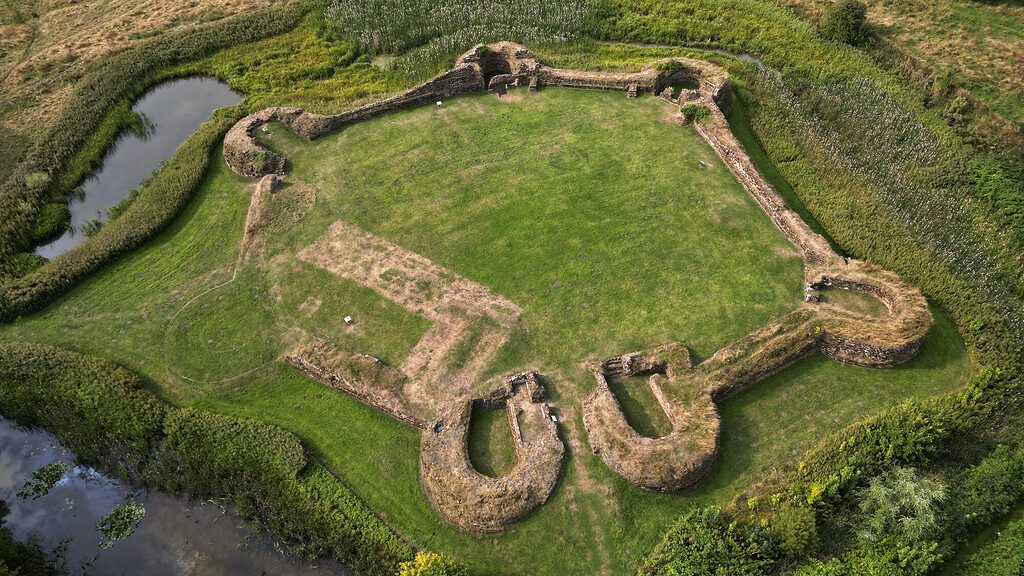
Built in the early 13th century by Ranulf de Blundeville, the Earl of Chester, Bolingbroke Castle was designed as a strong, hexagonal fortress. Its thick walls and deep moat reflected both wealth and a need for defense during a time when England was frequently unsettled by internal conflict. Unlike many castles perched dramatically on hills, Bolingbroke’s strength lay in its solid, geometric design and strategic positioning within the Lincolnshire landscape.
The castle’s greatest claim to fame, however, is its connection to King Henry IV, who was born here in 1367. Known as Henry Bolingbroke before he took the throne, his rise to power was anything but ordinary. After being exiled by King Richard II, Henry returned to England, gathered support, and ultimately deposed Richard to become king. This marked a significant moment in English history—the first successful overthrow of a reigning monarch since the Norman Conquest.
During the English Civil War in the 17th century, Bolingbroke Castle once again found itself caught in the crossfire. It was held by Royalist forces but eventually besieged and captured by Parliamentarian troops. Following its surrender, the castle was deliberately slighted—partially destroyed to prevent its future use as a military stronghold. This act sealed its fate, transforming it from a symbol of power into the romantic ruin we see today.
Walking through the remains of Bolingbroke Castle now, it’s easy to imagine its former grandeur. The outlines of its towers and walls still stand, weathered but resilient. There’s a quietness to the site, broken only by the wind and birdsong, that invites reflection. Unlike more crowded historic landmarks, Bolingbroke offers a more intimate encounter with the past.
Today, the castle is managed as a heritage site, open to visitors who are willing to venture off the beaten path. It may not boast the polished displays of larger attractions, but that’s part of its charm. Bolingbroke Castle feels authentic—untouched by over-commercialization, allowing history to speak for itself.
In many ways, Bolingbroke Castle represents the lifecycle of power: its rise, its peak, and its inevitable decline. From the birthplace of a king to a casualty of civil war, it stands as a quiet reminder that even the mightiest strongholds are not immune to time.
For those who appreciate history in its rawest form, Bolingbroke Castle is more than just a ruin—it’s a story etched in stone, waiting to be discovered.